SOUNDS TRAIL (Cammino dei Suoni)
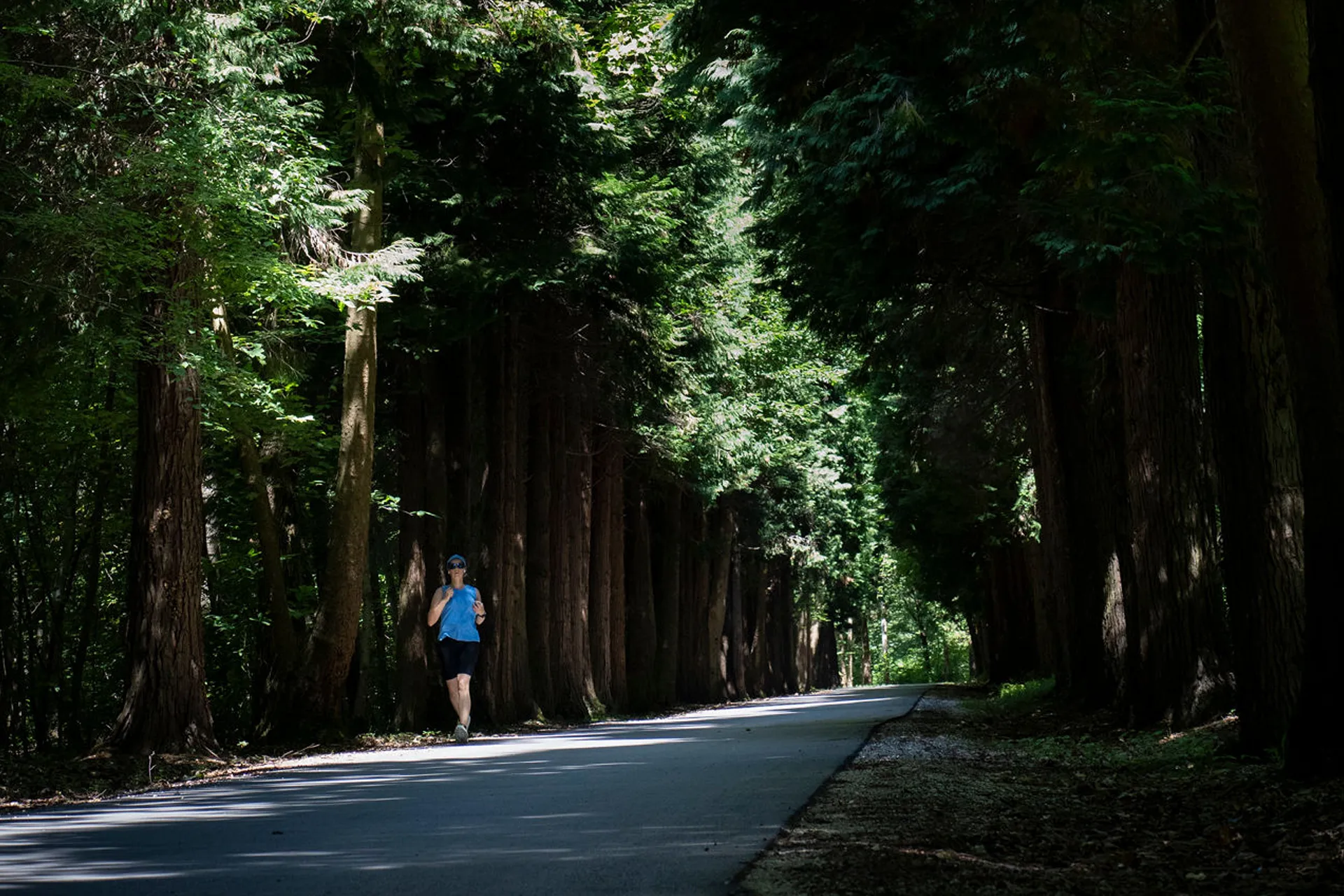
The Sounds Trail (CSU) allows hikers to navigate a dense network of historic paths and cross the territory immediately adjacent to the Crespano mountains, among which one can recognize the mighty ridges of Frontal and Monte Castel. As for the route, it starts from Castegner dea Madoneta, a traditional meeting place for village festivals, picnics, and visits to the Vegetational Garden (now a center for education and protection of the plant environments of the Grappa Massif), but also a starting point for guided or solo excursions on Frontal or in the San Liberale Valley, skirting the bed of the Lastego torrent.
HORIZON TRAIL (Cammino dell’Orizzonte)
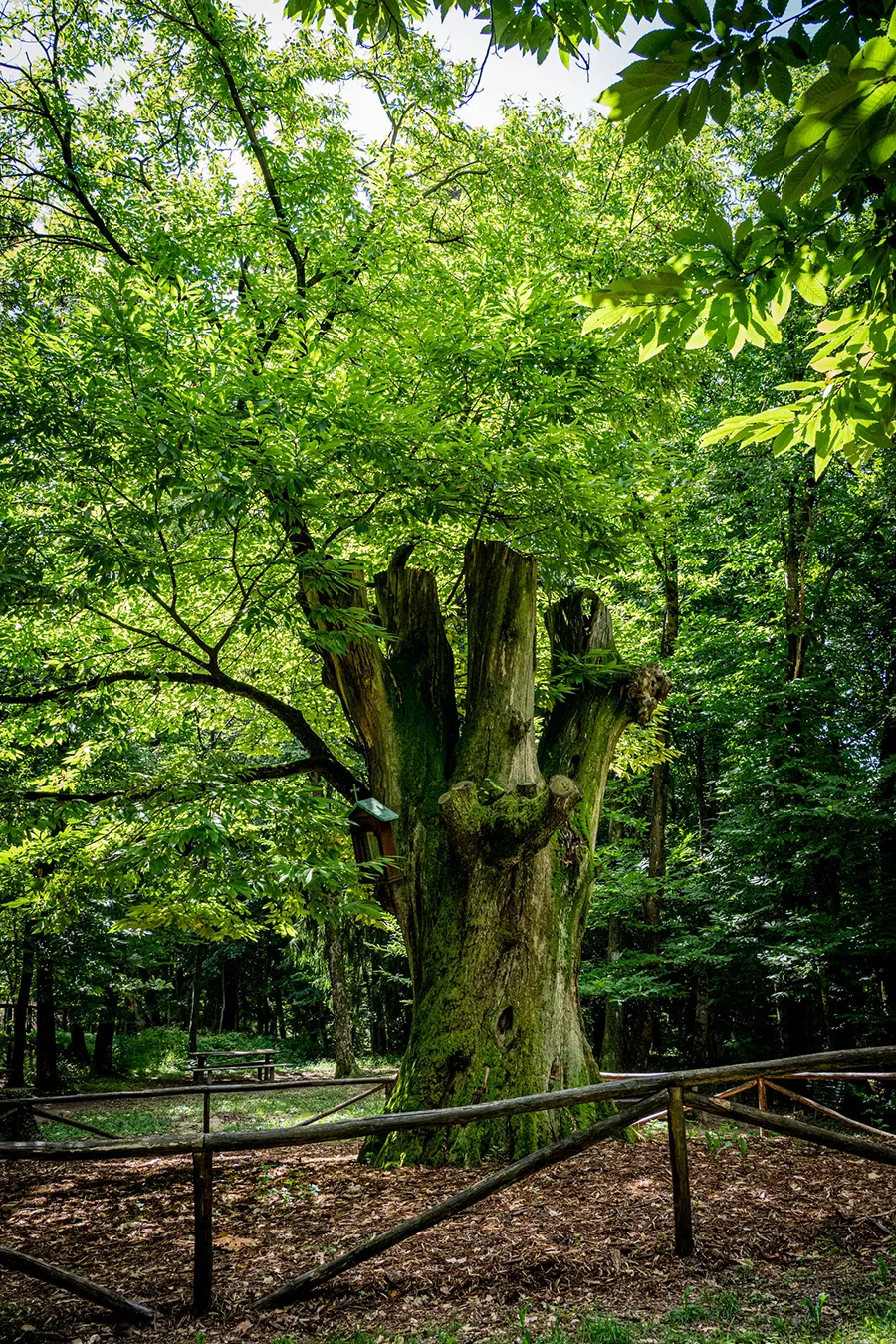
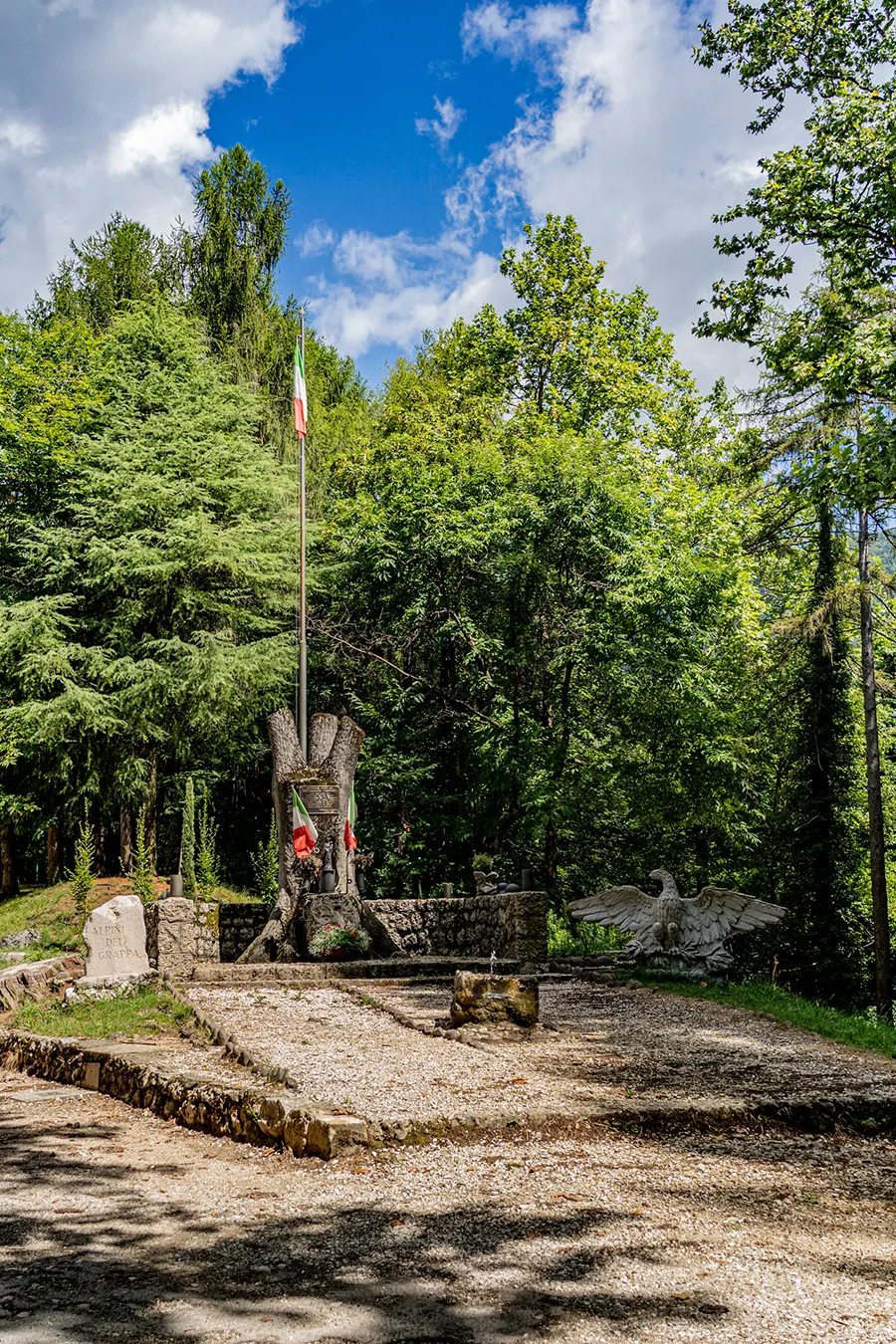
This is the shortest and easiest of the Mid-Mountain Trails: little more than half an hour if walked at a good pace, but it should not be rushed because its brevity has a twofold purpose: the first is the pleasure of slowness. In fact, after the short ascent from Ca’ Botto to the access point, the path largely maintains the same altitude and invites a meditative and sensory pace among black hornbeams, ashes, downy oaks, and chestnuts, in search of absolute silence, far from the acoustic pollution of the plain. Once at the summit of Martel locality, it offers a first viewpoint over the Venetian plain, a true spectacle of both evocative beauty and attention to recognizing the border towns between the Treviso and Bassano areas. On particularly clear days, one can gaze at a distant horizon: as the novelist John Dos Passos reminds us (right in these places during the Great War), from these lands he drew and described “the Venetian plain spotted with purple and in the background the blue humps of the Euganean Hills”. Upon reaching Casere Corpon, another viewpoint allows one to admire a more local landscape, a true Nativity scene: in the foreground, Col Muson between Fietta and Castelcucco, and in the distance the Asolo Hills, with Montello in the background.
FIVE SAINTS TRAIL (Cammino dei Cinque Santi)
The Five Saints Trail (CCS) skirts and crosses the border of three localities multiple times: Sant’Eulalia, Cassanego, and Crespano, and allows one to rediscover some secret corners of a popular religiosity upon which the foothill peoples have always rooted their sense of being in the world, between certainties and fears, between accepting the harshness of things and hoping for a better life. In Santa Lucia locality, a shrine marks a devotional presence that still survives today, and the locality of San Vito reminds us that the concentration of places of worship at this altitude (together with the not-distant ones of San Vittore and San Prosdocimo) suggests that Crespano once extended here, just below the Sanctuary of the Madonna del Covolo. One then arrives at the very ancient village of Gherla (11th century), at Villa Manfrotto-Canal (one skirts its noble chapel, the 17th-century Oratory of the Assumption), as well as the viaduct of the Decauville railway, a connecting route from Bassano to Crespano during the Great War, and finally to the Savi district.
SUMMIT TRAIL (Cammino della Cima)
The Summit Trail (CAM) is interesting because the attentive hiker will be struck by the heterogeneity of the natural environments it crosses, from chestnuts to arid-rocky meadows, from beeches to subalpine shrubs, from debris and rockfall to high-altitude pastures, without forgetting, for example, the considerable floral and plant richness that records at least 1575 different plant species! From Bottò locality, one gradually climbs the path called Marmorine: from and then to Campo Croce, in Camol, in Val del Poise, thus allowing the hiker to tread paths that existed even before the Great War and were dedicated to transhumance, to the transport of mountain products and merchandise to and from the Feltre area. Finally, when descending, one walks along the mountainous south-southwest direction (which branches off from Cima Grappa), reaching the Colombera ridge (1499 m) and from there follows the southern buttress of the Massif, between steep walls and wooded slopes, to the Don Paolo Chiavacci Center or – with more time available – also to Covolo locality to then easily return to Ca’ Botto.